HUGO ELMQVIST – A. GRANBERG – BALUSTER VASE, CIRCA 1900
BALUSTER VASE, CIRCA 1900
Patinated bronze
Signed H.E-T, A.B E. Gj – metod Sockholm Dec. A Granberg samt i botten HE Aa 5
Height: 16.5 cm.

Art Nouveau & Art Déco - Gallery in Monaco
Showing 49–72 of 900 results
BALUSTER VASE, CIRCA 1900
Patinated bronze
Signed H.E-T, A.B E. Gj – metod Sockholm Dec. A Granberg samt i botten HE Aa 5
Height: 16.5 cm.
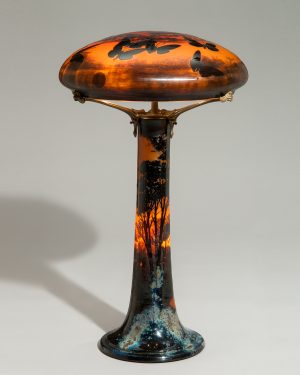
IMPORTANT LAMP, CIRCA 1900
Triple glass with metallic powder inclusions with a design of butterflies on the shade on a arborescent landscape. Fired polished and hammered
The mount in patinated bronze
Etched signature
70 cm. high
Diameter of the shade: 40.5 cm.
TEA SERVICE, CIRCA 1900
Silver tea set, finely chased with scrolls and volute
Comprising:
Tea-pot, coffee-pot, cream jug, sugar bowl
With silversmith mark and French Minerva mark
SIX SHIRT BUTTONS AND THREE CLOAK BUTTONS
Gilded metal depicting Sarah Bernhardt in the role of L’Aiglon
In their modern case
DECORATIVE ELEMENT, CIRCA 1900
Copper and metal
Bibliography
Karin Blanc, Ferronnerie en Europe au XXème siècle, éditions Monelle Hayot, 2015, ill. p. 548
DECORATIVE ELEMENT, CIRCA 1900
Copper and wrought metal, decorated with three cherries and leaves
Unsigned
Bibliography
Art et Décoration, 1901, vol. II, “Les objets d’art aux Salons”, page 51 : “Ses adaptations de fleurs et de fruits pourront lui donner de très bons résultats s’il se préoccupe de corser un peu plus ses formes”
To be compared with a similar piece presented at the Société nationale des Beaux-Arts in 1904 and illustrated on plates 6 and 7 of L’Art décoratif aux Expositions des Beaux-Arts, Librairie d’Art décoratif – Armand Guérinet, publisher
Karin Blanc, Ferronnerie en Europe au XXème siècle, éditions Monelle Hayot, 2015, ill. p. 157
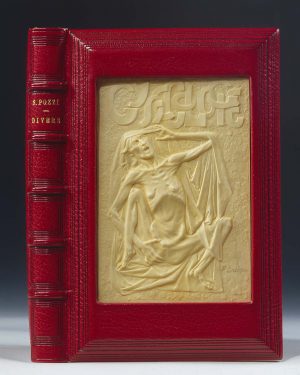
“GYNECOLOGIE”
Ivory bas-relief titled Gynecology adorning the front cover of a red jansenist morocco binding by Edouard Pagnant, containing various documents concerning the physician’s achievements, created between 1898 and 1906 and offered by the artist to Dr. Samuel Pozzi
Signed. Spine with raised bands, titled S. POZZI – DIVERS in gold. Handwritten letter signed by Lalique dated 16 mars 1907
17 x 11.5 cm.
Exhibition
1900, Galeries nationales du Grand Palais, Paris, 14 March – 26 June 2000, ill. page 244, n. 243 in the exhibition catalogue
Bibliography
Alison Syme, A touch of blossom – John Singer Sargent and the queer flora of fin-de-siècle art, The Pennsylvania University Press, 2010, ill. full page 136 (interesting article on Dr. Pozzi)
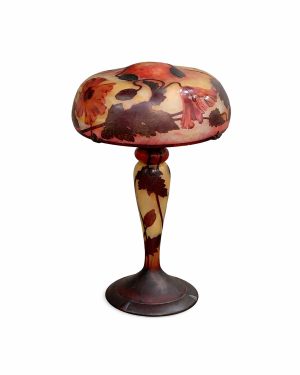
LAMP WITH POPPIES, CIRCA 1900
Glass. Wheel engraving
Signed
Height: 47 cm.
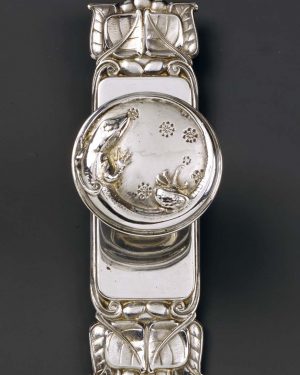
DOOR PLATE, CIRCA 1900
Silver metal in the Secessionist style, with a circular door knob featuring a lizard motif
Length: 26.5 cm.
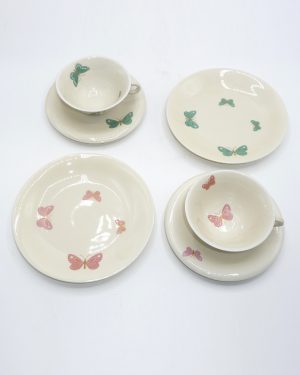
SET OF TEN CUPS AND SAUCERS, CIRCA 1930
Beige ceramic, decorated with an enamel butterfly motif
Signed
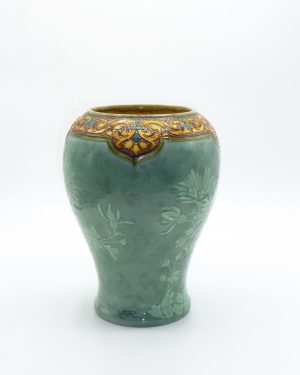
BALUSTER VASE, CIRCA 1900
Glazed faience with a floral decoration on a celadon background, the neck
adorned with an orientalizing frieze featuring yellow arabesque motifs
on a plum ground, interior glazed in yellow
Signed Diffoth in a Japonizing style
Height: 25 cm.
Diameter: 18 cm.
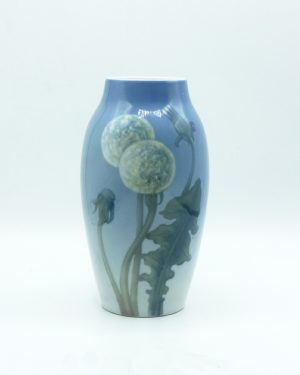
VASE, EARLY 20th CENTURY
Polychrome porcelain baluster vase decorated with dandelions
Bears the artist’s monogram and numbered 7916/243
Height: 25 cm
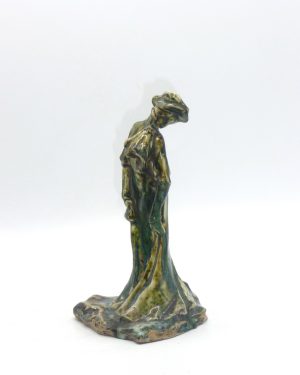
FIGURINE, CIRCA 1900
Rare polychrome enamelled porcelain figurine depicting an elegant lady in a long dress with a hat
Unsigned. Very small chip at the base
Height: 20 cm
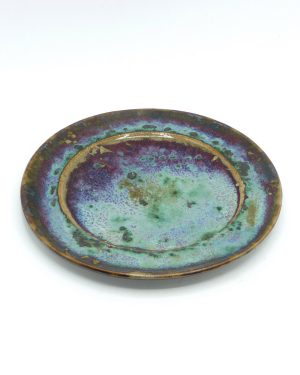
PLATE, CIRCA 1900
Stoneware plate
Incised signature
Diameter: 23.7 cm.
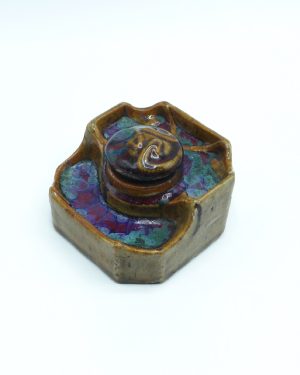
INKWELL, CIRCA 1900
Square stoneware inkwell with undulating sides, original stoneware reservoir and lid
Rare model
Stamped signature in relief Les Grands Feux de Dalpayrat and numbered 246
7.5 x 11 cm.
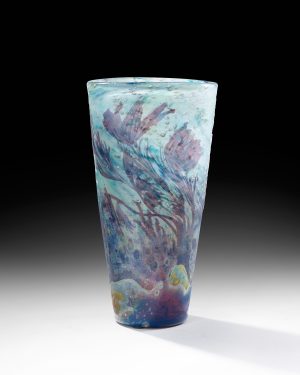
“ANEMONE” VASE, CIRCA 1897-1900
Conical multilayered vase, internally decorated and engraved
Signed
21.5 cm. high
Exhibition
Emile Gallé, Exhibition in six Japanese museums, 2000-2001, n. 45 in the exhibition catalogue, ill. pp. 90 and 91 (example at the Juken museum)
Bibliography
A similar 27 cm. high vase in the collections of Juken Museum of Art, Yoshiwa, prefecture of Hiroshima, Japan
Another, 28,2 cm. high, is in the collection of Her Royal Highness Margrethe II, the Queen of Denmark
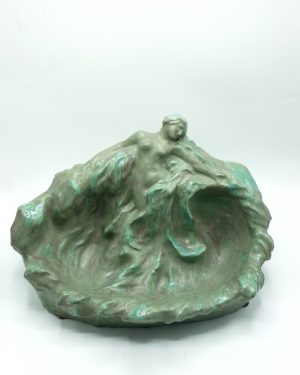
SCULPTURE DEPICTING A DANCER, CIRCA 1900
Stoneware
Bearing the monogram JP, unidentified
26.5 x 37 cm.
Bibliography
Paul Arthur, French Art Nouveau Ceramics, An Illustrated Dictionary, Norma éditions, 2015, ill. p. 146
TRAY, CIRCA 1900
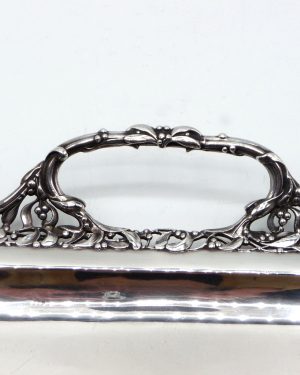
Silver, decorated with mistletoe
With Frech Minerva mark and silversmith’s mark
Dimensions: 34.5 × 56.5 cm.
BOWL, CIRCA 1900
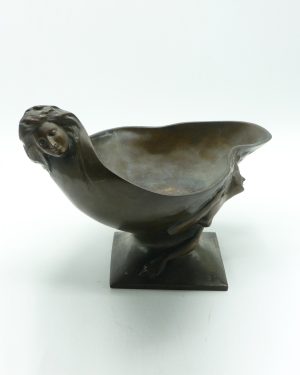
Patinated bronze
Signed
Height: 23.5 cm.
Biography
Revue des Arts Décoratifs, 1899
Exhibition
Salon des Artistes Français, 1899
“WOMAN WITH BOW” CANDY DISH, CIRCA 1900
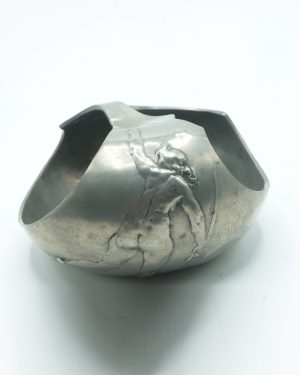
Pewter
Signed, bearing the foundry mark, Desbois monogram and numbered C 352
Height: 9 cm.
Length : 17.5 cm.
Exhibition
Maison Siot-Decauville catalogue, ill. p. 83
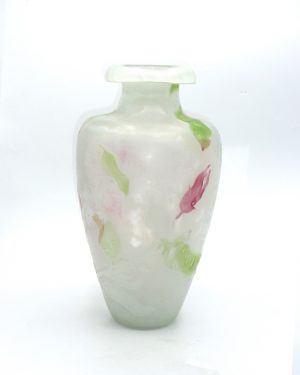
“LES BLANCS SOLEILS D’AUTOMNE” OR “CHANT D’AUTOMNE” IMPORTANT VASE, CIRCA 1900
Glass marquetry in shades of green and pale pink against an opalescent white ground
Decorated with swamp magnolia blossoms, acid-etched and finely wheel-carved
Height: 34.5 cm.
Exhibition
Smaller-size model, exhibited at the 1892 Salon. The smaller version of this model is preserved in the collections of the Musée d’Orsay under identification no. 33270 and inventory no. PHO 1986 71 157
Bibliography
Louis de Fourcaud, Émile Gallé, in the series Les Artistes de tous les temps, published by Librairie d’Art Ancien et Moderne, Paris, 1903; the smaller version of the model is illustrated on page 27 and titled Les Blancs Soleils d’Automne
Revue des Arts Décoratifs, seventeenth year, 1 January 1897; the smaller version of the model is illustrated on page 342 and is also titled Chant d’Automne
Provenance
The vase was commissioned from Émile Gallé by Félix Crousse (1840–1925) and subsequently remained in the family by descent.
Born on 2 October 1840 in the Boudonville district of Nancy, François Félix Crousse was the son of Louis Crousse, a gardener, and his wife Françoise Morel. He attended the Imperial Lycée of Nancy from 1850 to 1855 before undertaking a horticultural apprenticeship that lasted approximately ten years, notably with Auguste Calot in Douai.
He quickly distinguished himself through his work on the ivy-leaved geranium, which he successfully improved, as well as on various other flowering plants, including chrysanthemums, cyclamens, and herbaceous peonies, for which he developed nearly eighty new cultivars. Crousse achieved international renown as one of the foremost specialists in tuberous begonias.
Closely associated with several artists of the École de Nancy—among them Jacques Gruber, Ernest Bussière, and above all Émile Gallé—he paid tribute to Gallé by giving his name to several of his floral creations, particularly peonies and begonias.
In 1877, together with Victor Lemoine, Émile Gallé, and Léon Simon, he founded the Central Horticultural Society of Nancy (Société Centrale d’Horticulture de Nancy), whose development he actively supported. He encouraged the creation of a society bulletin, which he edited for a time before entrusting its management to Gallé, and later served as vice-president of the organization.
Félix Crousse gained particular recognition at the great international exhibitions. He was awarded a Gold Medal at the 1878 Paris Exposition for his peonies and a Silver Medal at the 1889 Paris Exposition for his begonias.
This is typical provenance text in an auction catalogue: it establishes a direct historical connection between the original commissioner, the celebrated horticulturist Félix Crousse, and Émile Gallé, while emphasizing the vase’s uninterrupted descent within the family.
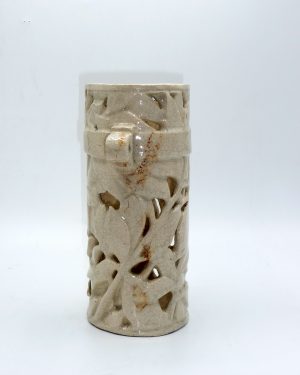
VASE, CIRCA 1900
Roll-shaped faience vase with openwork decoration, featuring lateral handles on a decorative band encircling the body.
Height: 23.3 cm.
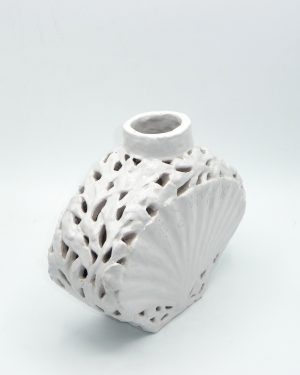
VASE, CIRCA 1900
Glossy white earthenware vase with openwork at the upper body, shaped like a scallop shell
21.5 x 23 x 10 cm.
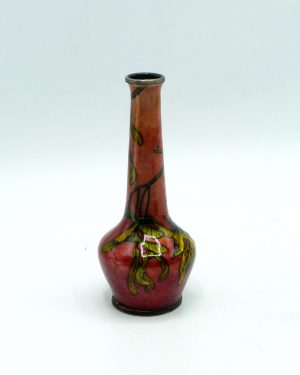
SMALL SOLIFLORE VASE, 1906
Polychrome enamel on silver, decorated with a beetle on mistletoe branches
Signed in enamel: P. Bonnaud Limoges 1906
With French Minerva mark and silversmith mark B H (for Bouvier and Hammont)
Height: 12,5 cm.
Diameter: 6 cm